Definitely or definately is a common spelling confusion in English. Many people write “definately” because the word sounds like it contains an “a” after the “n,” but that spelling is incorrect. The correct spelling is definitely, with an “i” before the “tely.”
In this article, you will learn the difference between definitely and definately, why one spelling is correct and the other is a common mistake, how to pronounce and use the word properly, and how to remember the correct spelling forever. Whether you are writing an email, an essay, a business report, or a social media post, knowing the correct form will make your English clearer and more professional.
(Quick Answer) Definitely or Definately
Definitely is the correct spelling, while definately is incorrect. The word definitely means “certainly,” “without doubt,” or “clearly.” It is an adverb used to show strong agreement, confidence, or certainty. The common mistake happens because many people pronounce the word quickly and confuse the spelling pattern.
Comparison Table
| Feature | Definitely | Definately |
| Correct Word | Definitely | Definately |
| Incorrect Word | No | Yes |
| Meaning | Certainly, without doubt | No standard meaning because it is misspelled |
| Definition | Used to express certainty or a clear decision | Incorrect spelling of definitely |
| Part of Speech | Adverb | Not a recognized English word |
| Grammar Rule | Spelled with “finite” inside: definite + ly | Incorrectly replaces “i” with “a” |
| Correct Usage | “I will definitely attend the meeting.” | “I will definately attend the meeting.” |
| Incorrect Usage | None when spelled correctly | Used by mistake in writing |
| Pronunciation | /ˈdef.ɪ.nət.li/ | Usually pronounced the same but spelled incorrectly |
| Common Mistake | Forgetting the second “i” | Replacing “i” with “a” |
| Memory Tip | Remember “definite” + “ly” | Avoid because “definate” is not a word |
| Example | “She definitely knows the answer.” | “She definately knows the answer.” (Incorrect) |
Meaning of Each Word
What Does Definitely Mean?
Definitely is the correct English word. It is an adverb that means certainly, surely, without question, or clearly.
The word comes from the adjective definite, which means something that is clear, fixed, or certain. Adding -ly changes the adjective into an adverb.
Definition of Definitely
Definitely means:
- Without any doubt
- In a certain way
- Clearly and surely
- Absolutely
Pronunciation of Definitely
The correct pronunciation is:
Definitely: /ˈdef.ɪ.nət.li/
It sounds like:
DEF-uh-nit-lee
The middle sound is often reduced in everyday speech, which contributes to spelling mistakes.
Examples of Definitely in Sentences
- I will definitely finish the project before Friday.
- She definitely deserves the award.
- That restaurant is definitely worth visiting.
- He definitely understands the instructions.
- We are definitely going to the event tomorrow.
What Does Definately Mean?
Definately is not a correct English word. It is a misspelling of definitely.
Although many native and non-native English speakers write “definately,” dictionaries do not recognize it as a standard word. The mistake usually happens because people associate the spelling with words like:
- Separate
- Desperate
- Accurate
These words contain an “a” sound or letter pattern, so writers sometimes incorrectly transfer that pattern to definitely.
Incorrect Examples
- I will definately call you later. ❌
- She definately wants to join us. ❌
- This is definately the best option. ❌
Correct Versions
- I will definitely call you later. ✅
- She definitely wants to join us. ✅
- This is definitely the best option. ✅
Definitely or Definately Meaning
“Definitely” is the correct spelling and means certainly, without doubt, or surely. It is used when someone is completely sure about something. “Definately” is a common spelling mistake and is not considered the standard English spelling.
Example:
“I will definitely finish the work today.”
Definitely or Definately UK
In UK English, definitely is the correct spelling. British English does not use “definately” as an alternative spelling. The word has the same meaning in both British and American English: something that is certain or sure.
Example:
“She will definitely attend the meeting.”
Definitely or Definately Oxford Dictionary
The Oxford English Dictionary and standard English dictionaries recognize definitely as the correct spelling. “Definately” is a misspelling that commonly occurs because of the way the word sounds when spoken.
The correct form is related to the adjective definite, which means clear, certain, or fixed.
Definitely or Definately in English
In English, definitely is the standard and correct form. It is an adverb used to emphasize certainty or confidence.
Example:
“This is definitely the right answer.”
“Definately” should not be used in formal writing, academic work, professional communication, or other situations where correct spelling is important.
Definitely or Definately Grammar
“Definitely” is an adverb. It can modify a verb, adjective, or an entire statement to show certainty.
Examples:
- “I will definitely call you tomorrow.”
- “She definitely knows the answer.”
- “That was definitely the best choice.”
“Definately” has no standard grammatical use because it is simply an incorrect spelling of “definitely.”
Definitely Meaning
Definitely means certainly, surely, or without any doubt. It shows that the speaker is confident that something is true or will happen.
Examples:
- “I definitely agree with you.”
- “He will definitely be there.”
- “We should definitely visit that place.”
Definitely vs Defiantly
Definitely and defiantly are two different words with completely different meanings.
- Definitely means certainly or without doubt.
- Defiantly means in a way that shows resistance or refusal to obey.
Examples:
- “I will definitely help you.”
- “He defiantly refused to follow the rules.”
A useful way to remember the difference is that definitely = certainty, while defiantly = resistance.
Definitely or Definately Meme
“Definitely or definately” is often used in spelling memes because definately is a very common misspelling of “definitely.” These memes usually make fun of the difficulty people have remembering the correct order of the letters.
Although the misspelling may appear in informal jokes or memes, definitely remains the correct spelling in standard English.
Spell Definitely or Definately
The correct spelling is definitely.
❌ Definately
✅ Definitely
A helpful way to remember it is to connect the word with definite:
definite → definitely
The spelling keeps the “ite” sound and structure from “definite.”
Spelling Definitely or Definately
When checking the spelling, always choose definitely. The incorrect form “definately” is a frequent typing and spelling error.
Correct: Definitely
Incorrect: Definately
For formal writing, exams, emails, articles, and academic work, use definitely.
Is It Definitely or Definately?
It is definitely.
“Definately” is a misspelling and should be corrected to “definitely.”
Example:
“I definitely want to learn more about this topic.”
Definitely or Definately UK
The correct UK spelling is definitely. There is no British English spelling variation that changes it to “definately.”
Whether you are writing in British English or American English, the standard spelling is:
Definitely
What Does Definitely or Definately Mean?
The correct word, definitely, means certainly, surely, or without doubt. “Definately” does not have a separate meaning because it is an incorrect spelling.
For example:
“She will definitely come.”
This means that the speaker is certain that she will come.
Definitely or Definately Which Is Correct?
Definitely is correct, while definately is incorrect.
The difference is simply the spelling:
- ✅ Definitely — correct
- ❌ Definately — incorrect
Definitely Spelling
The correct spelling is:
D-E-F-I-N-I-T-E-L-Y
A common mistake is leaving out the “i” after “defin” and writing definately. Remember that the word comes from definite, which can help you remember its spelling.
How to Spell Definitely
The correct spelling is definitely.
One easy method is to remember:
DEFINITE + LY = DEFINITELY
This connection can make the spelling easier to remember and helps avoid the common mistake “definately.”
How Do You Spell Definitely?
You spell it definitely.
Definitely = D-E-F-I-N-I-T-E-L-Y
The spelling “definately” is incorrect.
Example:
“I definitely remember meeting him before.”
Definitely Correct Spelling
The correct spelling of the word is definitely. It is an adverb meaning certainly or without doubt.
Correct: “I will definitely attend.”
Incorrect: “I will definately attend.”
If you are unsure, remember the base word definite.
Definate Spelling
“Definate” is an incorrect spelling. The correct spelling is definite.
- ❌ Definate
- ✅ Definite
When the adverb is formed from “definite,” it becomes definitely, not “definately.”
Example:
“Please give me a definite answer.”
“I will definitely be there.”
Key Differences Between Definitely and Definately
The difference between definitely and definately is simple:
- Definitely is the correct spelling.
- Definately is a spelling error.
- Definitely is a real English adverb.
- Definately has no accepted meaning.
- Definitely expresses certainty or confidence.
- Definately should never appear in formal or informal writing.
Practical Difference
| Situation | Correct Usage |
| Showing certainty | I will definitely help you. |
| Confirming information | She definitely called yesterday. |
| Expressing strong agreement | That is definitely true. |
| Making a confident prediction | They will definitely win. |
Grammar Rules for Definitely
Definitely Is an Adverb
Because definitely is an adverb, it modifies verbs, adjectives, or entire sentences.
Examples:
- I definitely agree with your idea.
- The movie was definitely interesting.
- Definitely, we should consider another option.
In these examples, definitely adds a sense of certainty.
Definitely Comes From Definite
A helpful way to understand the spelling is:
Definite + ly = Definitely
The base word is:
Definite
Not:
Definate
Since “definate” is not the correct adjective, “definately” cannot be correct.
Correct Spelling Pattern
The spelling contains:
D E F I N I T E L Y
Notice the important letters:
- “i” after the f
- “i” before the tely ending
Many spelling mistakes happen because people write:
D E F I N A T E L Y ❌
Instead of:
D E F I N I T E L Y ✅
When to Use Definitely
Definitely in Academic Writing
In academic writing, definitely can be used when making a strong statement supported by evidence.
Examples:
- Research definitely shows that regular practice improves skills.
- The results definitely indicate a connection between the two factors.
However, academic writers should avoid using it when they cannot prove certainty.
Definitely in Professional Writing
Definitely is acceptable in workplace communication when expressing confidence.
Examples:
- I will definitely complete the report by Monday.
- This strategy will definitely improve customer satisfaction.
It helps communicate commitment and reliability.
Definitely in Formal English
Definitely works well in formal English when used carefully.
Examples:
- This decision will definitely affect future policies.
- The organization definitely supports equal opportunities.
Definitely in Informal English
In casual conversations, definitely is extremely common.
Examples:
- “Are you coming tonight?”
- “Definitely!”
It is often used as a strong yes.
Definitely in Business Emails
Professionals commonly use definitely to confirm plans.
Examples:
- I will definitely review the documents today.
- We definitely appreciate your feedback.
However, avoid using it too frequently because repeated certainty words may sound exaggerated.
Definitely in Daily Conversation
Native speakers often use definitely to show agreement.
Examples:
- “Was that movie good?”
- “Definitely!”
- “Do you want pizza?”
- “Definitely.”
Common Mistakes With Definitely
Why People Confuse Definitely and Definately
The confusion happens for several reasons:
1. Pronunciation Does Not Match Spelling
When people say definitely quickly, the middle sounds may become unclear.
The spoken word:
DEF-uh-nit-lee
can sound like:
DEF-in-it-lee
This makes people guess the spelling incorrectly.
2. Confusing the Word With Similar Patterns
People may think the word follows patterns like:
- Desperate
- Separate
- Delicate
However, definitely comes from definite, not from a word ending in “ate.”
3. Forgetting the Original Word
Many people remember only the sound instead of connecting the word to its root.
Remember:
definite → definitely
Not:
definate → definately
Incorrect and Correct Examples
Incorrect:
- I definately agree with you. ❌
Correct:
- I definitely agree with you. ✅
Incorrect:
- She is definately coming tomorrow. ❌
Correct:
- She is definitely coming tomorrow. ✅
Incorrect:
- This is definately the right answer. ❌
Correct:
- This is definitely the right answer. ✅
Original Examples of Definitely in Sentences
- I will definitely submit my assignment before the deadline.
- The manager definitely appreciated the team’s hard work.
- She definitely improved her writing skills after practicing daily.
- The new employee will definitely become an important part of the company.
- I definitely remember reading that book during college.
- The weather will definitely affect our outdoor plans.
- He definitely knows how to solve difficult problems.
- The author definitely created a memorable character.
- Our teacher definitely explained the topic clearly.
- The company will definitely announce the results next week.
- I definitely agree with your suggestion about the project.
- The news report definitely changed public opinion.
- She definitely posted the update on social media yesterday.
- This restaurant is definitely one of the best places in town.
- The children definitely enjoyed the educational activity.
- We definitely need more time to complete this task.
- The book definitely provides useful information for beginners.
- He definitely made the correct decision.
- The team definitely worked together effectively.
- That conversation definitely helped me understand the issue.
Memory Trick: How to Remember Definitely Forever
Use this simple trick:
Definitely contains “finite.”
Think:
definite + ly = definitely
The word finite means limited or clearly defined. Since definitely comes from definite, it keeps the same spelling pattern.
Remember:
✅ Definite → Definitely
❌ Definate → Definately
Another memory trick:
“Definitely has two i’s.”
The correct spelling:
D E F I N I T E L Y
contains two “i” letters.
Mini Quiz
1. Which spelling is correct?
A) Definately
B) Definitely
C) Definatly
Answer: B) Definitely
2. What does definitely mean?
A) Maybe
B) Without doubt
C) Quickly
Answer: B) Without doubt
3. Choose the correct sentence.
A) I will definately attend.
B) I will definitely attend.
C) I will definitly attend.
Answer: B) I will definitely attend.
4. What type of word is definitely?
A) Noun
B) Verb
C) Adverb
Answer: C) Adverb
5. Which word is the root of definitely?
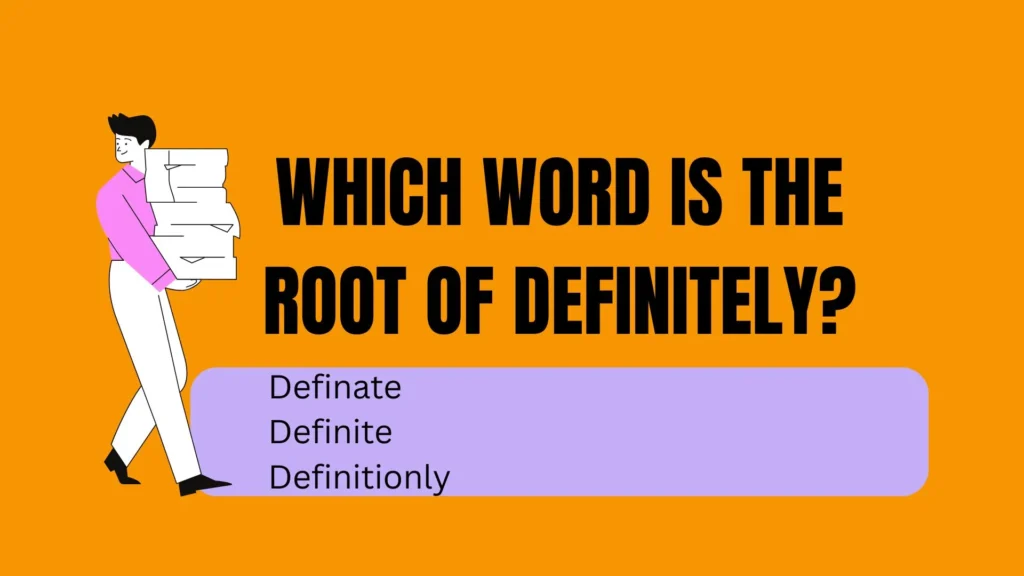
A) Definate
B) Definite
C) Definitionly
Answer: B) Definite
Frequently Asked Questions
Is definitely the correct spelling?
Yes, definitely is the correct spelling. It is an English adverb that means certainly, surely, or without doubt. The spelling comes from the adjective definite, which means clear or certain. The word definately is a common misspelling and should not be used in writing.
Is definately a word?
No, definately is not a recognized English word. It is a spelling mistake of definitely. Although many people use this incorrect form in online writing and messages, dictionaries and formal writing standards accept only definitely as the correct spelling.
Why do people spell definitely as definately?
People often spell definitely as definately because the pronunciation can be unclear, especially in fast speech. They may also confuse it with words that contain “ate” patterns. Remembering that definitely comes from definite helps avoid this common spelling error.
How do you pronounce definitely?
Definitely is pronounced as “DEF-uh-nit-lee.” The word has a softer middle sound in natural speech, which sometimes causes spelling confusion. Breaking it into parts, definite + ly, can make both pronunciation and spelling easier to remember.
Can I use definitely in formal writing?
Yes, definitely can be used in formal writing, including academic, professional, and business contexts. It expresses certainty or confidence. However, writers should use it carefully and avoid making claims that cannot be supported with evidence.
What is an easy way to remember definitely?
The easiest way to remember definitely is to connect it with the word definite. Since the base word is definite, the correct spelling is definitely. The incorrect form definately changes the “i” to an “a,” which breaks the original spelling pattern.
Key Takeaways
- Definitely is the correct spelling.
- Definately is always incorrect.
- Definitely is an adverb meaning certainly or without doubt.
- The word comes from the adjective definite.
- Remember: definite + ly = definitely.
- Definitely is acceptable in casual, professional, and academic writing.
- The mistake happens because pronunciation can hide the spelling pattern.
- Always use definitely when expressing certainty.
Conclusion
Understanding the difference between definitely or definately is important for clear and professional English writing. The correct word is definitely, which means certainly, surely, or without doubt. The spelling mistake definately happens often because of pronunciation confusion, but it is not accepted in standard English.
Remember the simple rule: definite becomes definitely. Once you connect the word to its root, you can avoid this common mistake and use the correct spelling confidently in every situation.

I am Emily Carter, an English grammar writer and language enthusiast dedicated to helping people improve their writing skills with simple and clear explanations. I have spent years studying English usage, sentence structure, punctuation, and common grammar mistakes. My goal is to make grammar easy for students, professionals, and everyday writers by explaining complex rules in a practical way. I believe good grammar builds confidence and helps people communicate their ideas more effectively.
I have written several educational resources, including my books “The Complete Guide to English Grammar Rules” and “Mastering English Writing: A Practical Grammar Handbook.” Through my articles and books, I continue to help readers understand English better and write with accuracy and confidence.